












Madison College oil painting instructor Philip Salamone does not offer students the kind of easy reassurance they might seek from an artist.
He does not tell them to simply follow their passion.
In fact, Salamone says something far less sentimental – and far more demanding.
“I don’t really encourage students to pursue art,” he said. “If you need the encouragement, then maybe you just shouldn’t do it.”
The remark sounds harsh until Salamone explains what he means: the students most likely to build a life in art are those who cannot imagine leaving it alone.
“The only people worth encouraging are the ones who can’t be discouraged,” he said.
For Salamone, painting was never just a hobby. He once considered engineering, attracted by its practical path, but found himself continually drawn back to art.
“I had to take a step away from it to realize that I needed it more in my life than just weekends,” Salamone said. “I felt like the best version of myself when I was making art, around art or talking about art.”
That understanding led him to a sustainable path: commissions, teaching, studio work and years of steady practice – a life built around returning to the canvas.
Now Salamone teaches at Madison College, runs a studio program and raises two children, offering little room for artistic ideology. He sees creativity not as sudden inspiration, but as a long game of discipline, curiosity and returning to the work.
That philosophy extends directly into both his classroom and his studio practice.
Though he also works in watercolor, Salamone remains most deeply committed to oil painting, drawn to its slow drying time, tactile flexibility and long historical lineage.
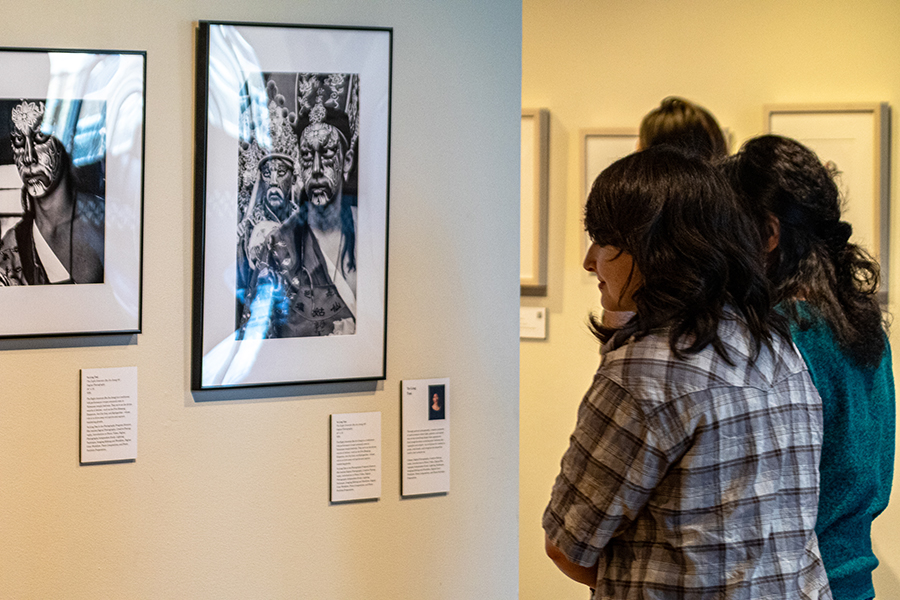
His work is also present in the Madison College community. Salamone participated in the 2026 Madison College Studio Faculty Showcase, featuring art instructors’ creative techniques and ongoing growth.
To Salamone, oil offers something few modern media do – time. Time to manipulate color, build texture, use brushstrokes intentionally and keep adjusting an image while the paint remains alive on the canvas. Through this, he is constantly reminded of the importance of art history.
“There’s a history there,” he said. “Ninety percent of the paintings in a museum are oils, and nearly all of my favorite paintings are oils.”
He knows that devotion can sound old-fashioned, outdated and of another era.
“I’m a walking anachronism,” he said. “I belong in the Renaissance Fair.”
But that slower way of working is central not only to how Salamone paints but also to how he teaches Madison College students to trust ongoing observation in a culture that thrives on interruption.
“It’s especially hard now with cell phones and TikTok videos to sit in front of a bowl of apples and want to stare at that for hours,” he said.
Inside Salamone’s classroom, that endurance is often the assignment: remain with the object, remain with the face, remain with the problem long after the impulse to rush toward a finished answer kicks in. He asks students to see improvement not as a sudden flash of talent, but as the gradual result of looking longer and returning repeatedly.
That philosophy also shapes his own life outside the classroom. Between teaching, running studio classes and caring for two young children, Salamone said painting only happens because he refuses to let convenience get in the way.
“Monday nights are the days I paint,” he said. “I kind of put myself in a position where I have to do it, because if I gave myself the option, I would take that option often.”
For an artist, he is unusually candid in his admission, saying that discipline is often less about creative spark than about understanding one’s own tendency to postpone.
For years, that meant taking commissions, building skills job by job and making practical decisions that still left room for painting. The artistic life, he said, was never one dramatic leap but an accumulation of smaller choices that kept moving him toward the work he wanted most.
“Art to me feels like planting a garden that bears fruit,” he said. “It takes a while to establish itself – to build your skills, find your voice, build your community. It’s not immediate.”
That long view also determines how he responds to students who enter class already convinced that artistic ability is either something a person naturally possesses or does not.
“A lot of people just kind of give up on themselves,” he said. “They just decide that they don’t have what it takes. But what it takes is interest and curiosity.”
For Salamone, talent may exist, but he sees it as far less decisive than consistency — the willingness to keep showing up, keep looking and keep making something before deciding whether you are good at it.
Whether or not that eventually becomes a career is almost beside the point.
“I would say make space for that in your life,” he said. “It seems like checking in with that part of yourself is as important as exercising your body. It’s exercise for your soul.”
For Salamone, that work still begins the same way it did years ago: by showing up, looking carefully and trusting that something authentic will emerge.
Instructor puts patience above inspiration in art
May 5, 2026
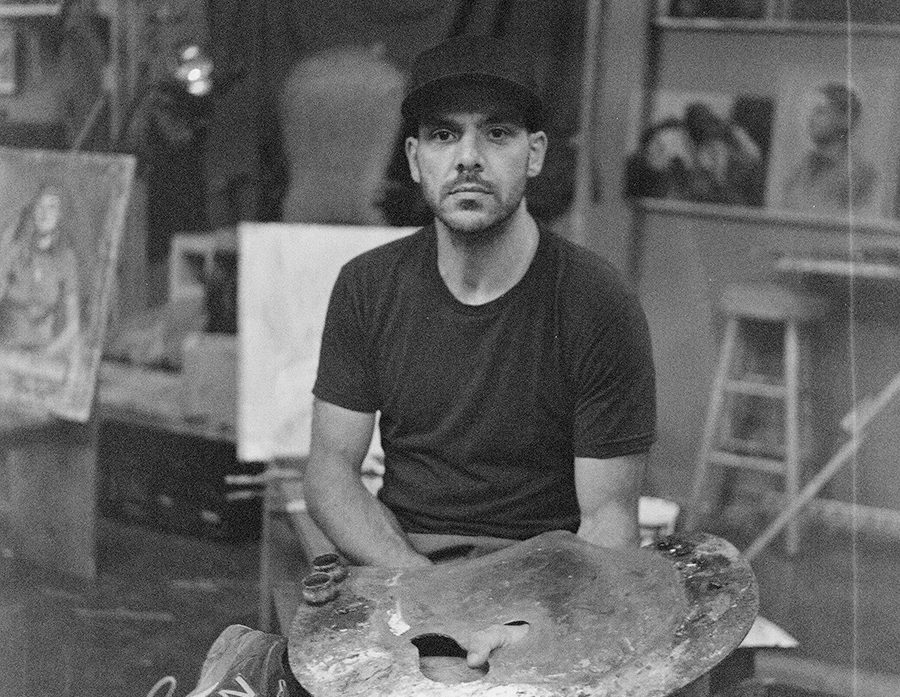
Madison College art instructor Philip Salamone is pictured in his studio. (Photo by Amanda Wood / Provided to The Clarion)
Story continues below advertisement