


















The Supreme Court is deciding whether the president alone can limit birthright citizenship — a core promise of the Constitution that anyone born in the United States is a citizen.
The case, Trump v. Barbara, centers on Executive Order 14160, signed Jan. 20, 2025. According to the Federal Register, the order directs federal agencies not to recognize citizenship for certain children born in the United States if their mother is undocumented or in the country on temporary legal status and their father is not a U.S. citizen or lawful permanent resident.
While this case concerns immigration, the deeper issue is whether a president can redefine citizenship through executive order, turning a constitutional guarantee into an administrative decision.
The 14th Amendment states: “All persons born or naturalized in the United States, and subject to the jurisdiction thereof are citizens.” The administration interprets “subject to the jurisdiction” to exclude children whose parents lack permanent legal status.
But that interpretation collides directly with more than a century of Supreme Court precedent.
In United States v. Wong Kim Ark, decided in 1898, the Supreme Court held that Wong Kim Ark, who was born in San Francisco to Chinese parents who were not U.S. citizens, was a citizen under the 14th Amendment. The court recognized narrow exceptions, including children of foreign diplomats and children of enemy forces in hostile occupation. It did not create a broad parental-status test for citizenship.
The government’s position treats a child’s citizenship as dependent on their parents’ legal status, but the Citizenship Clause focuses on the person born here, not their parents’ background.
Children born in the U.S., and their parents, are subject to U.S. law regardless of immigration status. Treating jurisdiction for punishment and citizenship differently creates a legal contradiction.
The precedent does not end with Wong Kim Ark. In Afroyim v. Rusk, decided in 1967, the Supreme Court held that the government could not strip a person of U.S. citizenship without voluntary surrender. The case involved a naturalized citizen whose passport was denied after he voted in an Israeli election. The court rejected the notion that government officials could forcibly deprive citizens of their citizenship.
Afroyim was not a birthright citizenship case, but it is still important here. It reinforces the principle that citizenship is not a privilege the government can revoke at will. Once citizenship is constitutionally secured, the government cannot treat it like a revocable permit.
The executive order is aimed at birthright citizenship, not at stripping citizenship from people who already have it. That distinction matters. But the precedent it would set is still dangerous. If the president can narrow the meaning of the Citizenship Clause by executive order, then the executive branch gains power over the boundaries of citizenship itself.
This is not just a procedural shift. This threatens the very structure of constitutional protection.
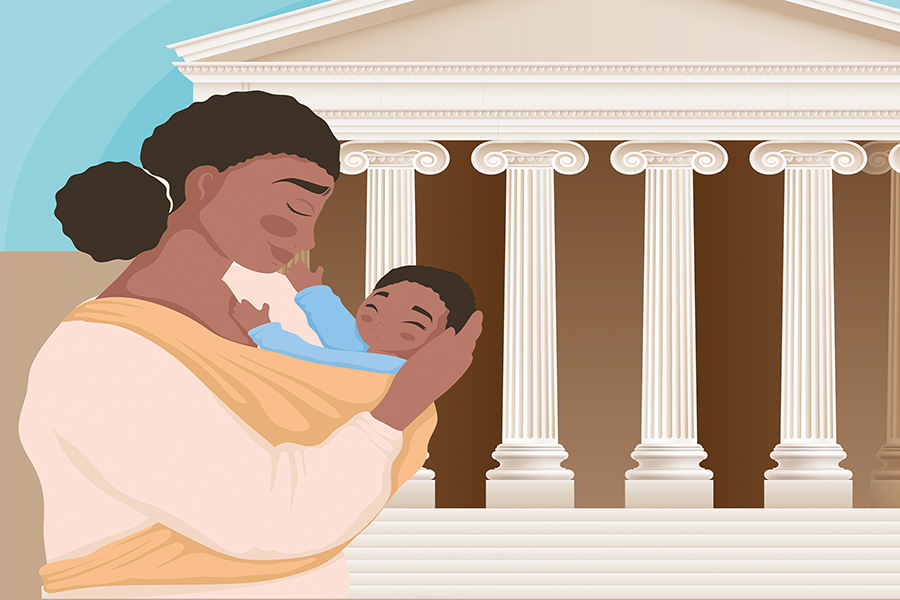
The Pew Research Center estimated that in 2023, mothers who were unauthorized immigrants or had legal temporary status gave birth to about 320,000 babies in the United States. Pew estimated that about 260,000 of those babies would not have qualified for citizenship if the executive order had been in effect.
These numbers make clear: this is no abstract debate. Each year, hundreds of thousands of children could face immediate and irreversible consequences.
Supporters of the order say birthright citizenship encourages illegal immigration, but using executive power to override constitutional citizenship is not reform — it is an end-run around democracy. Such an action undermines the foundation of citizenship and demands immediate, serious scrutiny.
The legal slippery slope is real. If citizenship can depend on parental status, then every birth becomes a status inquiry. Hospitals, agencies and families would have to navigate questions about immigration status, lawful presence, domicile and documentation before citizenship is recognized. Errors would not just create paperwork problems. They could decide whether a child belongs to the country of their birth.
This is exactly the uncertainty the Citizenship Clause was meant to prevent — and unless acted on, that uncertainty will become reality.
The Supreme Court should follow the text, history and precedent already before it. The 14th Amendment says birth in the United States carries citizenship when the person is subject to U.S. jurisdiction. Wong Kim Ark applied that rule to a child born here to noncitizen parents. Afroyim affirmed that citizenship cannot be treated as something government officials may forcibly take away.
The question is urgent: will the Supreme Court uphold the precedent, or will it allow this fundamental protection to unravel?
That concern is not theoretical. In Dobbs v. Jackson Women’s Health Organization, the court overturned Roe v. Wade and Planned Parenthood v. Casey, abandoning nearly 50 years of precedent. That decision showed that long-standing precedent is not immune when a majority of the court decides to revisit it.
The court must not repeat that failure. Citizenship is too essential, too foundational, to be reconsidered each time presidential ideology changes. The consequences would be immediate and deep.
Birthright Citizenship is not a loophole. It is not a reward for the parents. It is not a policy preference that can be rewritten by executive order. It is a constitutional rule that protects the stability of citizenship from political pressure.
If the Supreme Court lets a president narrow this rule, the first victims will be U.S.-born children of immigrant parents. But the damage will quickly spread, eroding the bedrock principle that citizenship is anchored in the Constitution — not at the president’s pleasure.
Legal precedent points in one direction. Will the court follow it?
Case could redefine citizenship
Supreme Court ruling will determine if president can redefine citizenship through an executive order
May 5, 2026
Story continues below advertisement