





















Getting sick is scary, especially when you wake up feeling unwell and don’t have all the answers, which can get our thoughts spiraling. Taking charge of your health is important, but jumping to conclusions is dangerous. Modern medicine changes daily, advancing with each discovery.
Vaccines and their formulas have seen huge strides in recent years, playing a critical role in pushing the envelope, thanks to advancements like the COVID booster and the 2025 flu shot.
However, navigating health decisions can be challenging. Suspicion regarding vaccines can be due to frustration, exhaustion or lack of trust. Personal beliefs and experiences shape our perspectives and regardless of our beliefs, the facts remain the same: people aren’t as willing to trust a needle anymore.
KFF, formerly known as The Kaiser Family Foundation, found that only 83% of Americans trust vaccines in cases of measles, mumps and rubella. The flu shot sees a 74% approval rate. Meanwhile, COVID only has a rate of 56%. Trust in agencies like the Centres for Disease Control and Prevention (CDC) has seen a substantial decrease since the start of this year, and numbers are expected to drop further as we approach 2026.
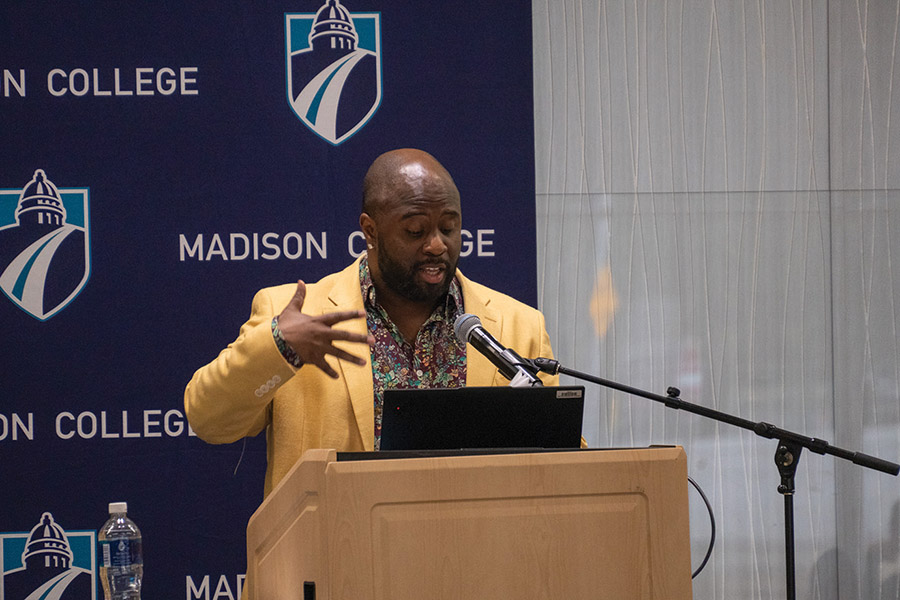
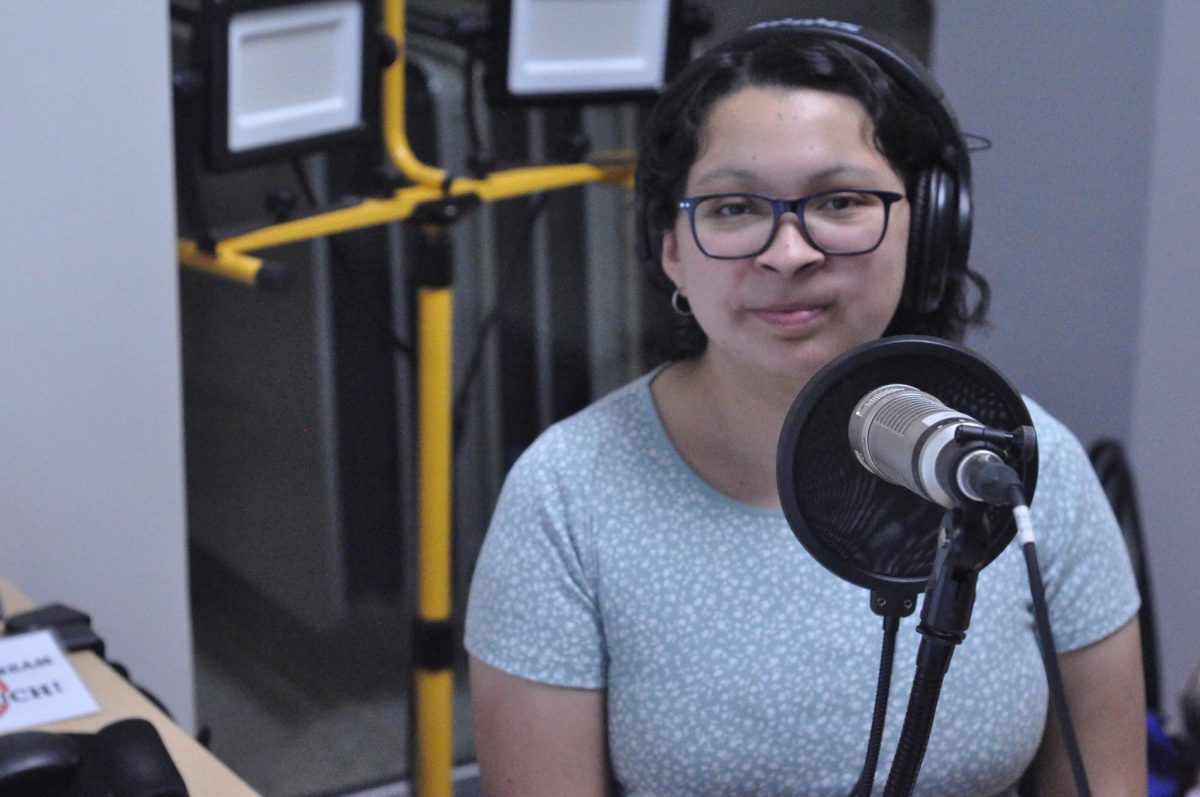
James Conway, a professor of pediatrics at the University of Wisconsin School of Medicine and Public Health, works for the UW Health Immunization program and oversees the pediatric infectious disease fellowship group, among other pivotal roles in advancing health care practices. He spoke to the Clarion, answering questions about vaccines and disproving common myths.
Q: Advancements in healthcare evolve daily. How far has modern medicine advanced in the past few years?
A: In the last 20 years, we’ve gone from crude technology where entire pieces of organisms were used to stimulate the immune system, so we had vaccines. We take the entire organism, grow it, and then kill it, grind it up and that would be your vaccine. And over the last 20 to 30 years, we’ve really started home in on what’s the most important piece of the organism that you need to stimulate immune response — to protect against it.
As we’ve added more diseases to the list of things, the vaccines have gotten simpler. This year, we’ve got a new COVID vaccine [that has been] able to figure out two important regions of the spike protein and just create immunity against those pieces. The vaccine, which used to have 50 micrograms of material to make enough immunity, now only has 10 micrograms, so it’s really honed in.
We were making dramatic progress because we’re both adding organisms that were able to protect against, as well as making the vaccines have fewer side effects.
Some people think vaccines do more harm than good. Can you explain what exactly a vaccine is and how it works?
In general, the idea for a vaccine is to turn on a small part of your immune system … in a way that tricks it into thinking it’s previously seen this infectious disease, has somehow survived it, and has developed a memory of that. Then [the immune system] can be called into action whenever [it comes] into contact with that organism again. A vaccine is [used] to trick the immune system to make it, so you don’t have to suffer through all the bad parts of having the disease.
Q: How long does it take for medicine to be proven effective and safe?
A: There are only two things a vaccine needs to be, and that’s it effective and is it’s safe. So, no vaccine is ever approved by the FDA, the U.S. Food and Drug Administration, unless [proven to be] both safe and effective.
It typically [takes] about 8 to 10 years from conception of the idea to try and develop the vaccine in the lab to [then test] it in animals. Then it’s tested in healthy humans [before doctors] eventually test it in wider groups of people that [they] were intent on vaccinating. And then following [the group] afterwards to see how long the vaccine worked for, the efficacy of it and any unexpected side effects that would happen in the years after you gave the vaccine.
During the pandemic, we went into Operation Warp Speed with what was called emergency use authorization. We got [the COVID vaccine] done in about two years of reviewing it through accelerated approval. That’s where you do all the usual things for showing that it’s safe and effective, but you don’t have to show exactly how long the immunity is going to last to determine when the next dose of a vaccine is going to be needed.
Q: How does a doctor ensure the correct form of care is being used? What happens when someone has doubts?
A: Nowadays, [doctors] have to maintain their certification. They take an open-book quiz every quarter and must get a certain score to maintain their licensure. [Doctors] must prove that [we’re] not only capable but also have to show that [we’re] continuing medical education. Every state has a certain number of hours of ongoing medical education to maintain your license.
The reason we have consultants is that [patients] want advice on what we recommend. The good news is that in most (U.S.) settings, there’s always going to be access to academic institutions where you can get consultation and recommendations.
Q: What is the process for curing a disease/virus? How is it different from treatment?
A: Curing doesn’t necessarily require treatment. Even before there were vaccines or even before antibiotics, lots of people would come down with conditions and be able to clear them themselves. If you get a headache, sometimes you don’t need to take anything. You can cure it by just taking it easy, hanging out in a quiet area, getting a good night’s sleep, and getting rehydrated, and you’ve cured yourself of a headache. Cure is a broad term. [Every] condition has a very different treatment.
Q: In a similar vein, some parents will refuse to get shots for their children. How does that impact the child and their family?
A: Most [vaccines] never even make it out of the lab, so any vaccine that makes it to the point where it’s approved and then wisely available has been tested to convince all these different organizations and different regular bodies that it’s safe and effective. So, when you get to the point where people are refusing the vaccines they’re deciding to leave their child vulnerable to a disease that we know could potentially disable or kill them and, at minimum, make their child miserable. Not vaccinating the kids [exposes] both the rest of the family and, even more concerning, other people in their network. Whether it’s in their school, their church, their neighborhood, other vulnerable individuals, [this decision] may have severe consequences.
Q: Schools require certain medicines/shots for children to be enrolled. What is the reason behind this? Why was this rule implemented?
A: This goes back over a couple hundred years, and it’s been upheld all the way up to the Supreme Court. Schools are required to keep a safe setting for kids to learn and have an obligation to exclude kids from the school who [have] active contagious diseases. Schools have the right — an obligation — to exclude kids [that have] a condition that puts other kids in danger. It’s the same reason that schools are allowed to prohibit guns from coming to school. They [must] keep the setting safe for the kids.
When vaccines were developed, against smallpox, schools decided that they could either exclude kids who had the disease or require kids to have a vaccine to be able to come to school. There are a couple of different times that [this rule] was challenged in court, and basically the Supreme Court said “yes, if part of keeping all the kids equally healthy and safe in school means excluding kids who are sick from the school, [the rules] can also include requiring kids to have a vaccine against the disease.”
Q: How do you feel about people who refuse treatment plans? Have you encountered people like that before? What does that process look like?
A: We all encounter it nowadays because of the internet. It’s gotten worse with AI. People will put what they think are the description of their symptoms or what they think their diagnosis is, and [their phone] will tell them what it thinks they need. I don’t know how much you’ve played with AI, but just as often as it’s right from a source, [it can be] wrong. So, it can be difficult to try and help somebody understand that what their phone is telling them is the right answer for their condition isn’t the right [treatment].
Sometimes, it’s that they just don’t like what the treatment is going to entail and want to do something that’s an alternative. It’s our job in medicine to help people understand all the options to manage their condition and to tell them what we think is the best treatment.
Sometimes you must explain to them that like they don’t have the experience or the background understanding of the condition to either know the right terms to put into Google or to understand exactly what the ramifications are for choosing some other approach.
Q: RJK Jr. claimed that Tylenol is linked to the rise in Autism is the U.S. Can a shot or medicine cause other health conditions or disorders? What are the most common ones?
A: One example is with the COVID vaccine. We tested them on many people, and most everybody tolerated them well. Then they got into even bigger groups of people — millions of people. There [was] a preservative [within the] vaccine, which, it turns out, a small number of people can be allergic to. Any kind of allergy can happen with a drug or vaccine, so it is certainly possible that a vaccine can trigger an allergic response in somebody. That’s the most common thing we see as a true health condition or a side effect that needs to be managed.
Q: In your opinion, what is the most harmful stereotype about health care or modern medicine? How can the public help resolve such a claim?
A: The failure or the inability of both the public and the media to understand the difference between association and causation. [There are] lots of instances where two different things happen that have nothing to do with each other, but people somehow associate them.
Causation is where, like, you give something and then something happens because of it. Association is something that happens coincidentally but has nothing to do with [the original action].
Autism is a great example. Autism didn’t ‘exist’ before 1993 when [doctors] first invented the diagnostic code for it. Then, in the late 90s, early 2000s, they consolidated a lot of other conditions all under the term autism spectrum disorder. So, Aspergers and neurodevelopmental delay and a couple other conditions that have their own unique codes were all bundled under one [umbrella term]. The most important thing was that the CDC and every state and professional society recommended routine screening for all kids for autism spectrum conditions. Autism is very common, and when you implement these broad screening programs to identify it, you’re going to find more people.
Just because science is getting better and there are more autism [cases], these two things have nothing to do with each other. They’re purely coincidental.
Q: Anything else you want to add/personally say?
A: Drugs are held to a different standard. They are tested on a couple of thousand people because it’s a very different paradigm. You’re taking a completely healthy person, and you’re giving them a product the goal of keeping them healthy. You give [patients] a vaccine, and the goal is they don’t get sick, they don’t get infected by something, so you must hold these products to a very different standard. [This is] why vaccines take a long time to develop and why they tend to be expensive because they really require much larger trials to be able to justify approval. … Vaccines are one of the most important public health [tool] that have ever been developed. Vaccines, to get to the point where they’re approved and recommended, must be [proven] safe and effective.