















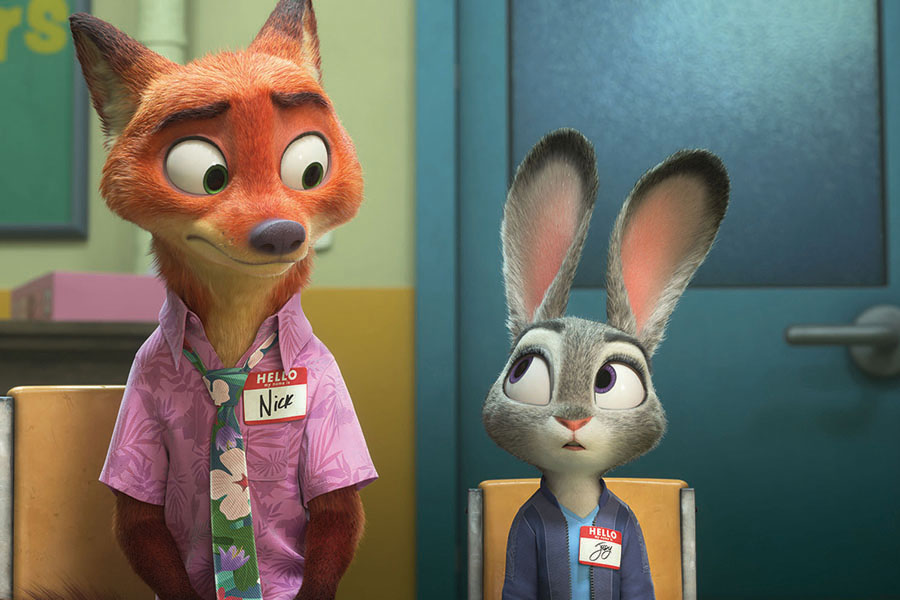
A decade after “Zootopia,” “Zootopia 2” returns as a confident, fast-paced sequel, tackling real-life and complex themes, without turning the movie into homework. Co-directed by Jared Bush and Byron Howard, the film follows rookie-turned-real-deal officer Judy Hopps (Ginnifer Goodwin) and reformed con artist now cop Nick Wilde (Jason Bateman) facing a new case that sends them deeper into the history of their city and their new partnership.
The setup is reminiscent of “Zootopia”: a simple mystery arrives and quickly spirals into a vast conspiracy. Judy and Nick end up on the trail of a new figure in town, the pit viper Gary De’Snake (voiced by Ke Huy Quan), and the city’s carefully managed story about its creation starts to unravel.
What works: world, momentum and character growth
The strongest argument for “Zootopia 2” is that it expands the world in a way that feels natural. The original film’s humor often came from its logic: different species need different infrastructure, so the city itself becomes one large visual gag. The sequel doubles down on that idea by fleshing out how this came to be and the intricacies within these environments, while including so much more to see.
A standout addition is Marsh Market, a water-logged district where both semi-aquatic and fully aquatic animals live together, which feels designed around practicality and equity for the residents and provides insight into life outside the city and how each district impacts the others.
The move flows quite naturally and is paced in tune with the story, with the biggest drag to progress being Nick and Judy’s own growing pains as partners. Both are struggling to adjust to their new roles, while also being caught up in a new high-paced assignment that impels itself into the story’s stakes and pacing wonderfully without feeling like an extra element.
Reuters described the film as being about the growing pains of their new partnership, and that shows up in the best scenes: the ones where the emotional stakes land without a speech explaining how you’re supposed to feel.
The music still matters.
Shakira returns as Gazelle in “Zootopia 2” with “Zootopia,” a high-energy party track that feels like a natural part of the movie rather than a pop-star detour. It’s staged and paced to match the film’s momentum, and the lyrics stay in step with where the story is headed without slowing anything down to make a point. “Zootopia,” carries over the musical spark that helps keep the sequel feeling bright and alive.
The political subtext: “Zootopia” still understands how fear spreads
What makes “Zootopia 2” feel especially timely isn’t that it just comments on current events, but it mirrors modern society. The new case follows a snake, a creature not seen in “Zootopia” for a while. The fear of this leads to the city: labeling an “outsider” before understanding them, letting rumors harden into policy, and treating public safety as a narrative problem as much as a practical one, something quite reminiscent of our current times.
This is one part of the movie that really shines. It separates the story that the people of “Zootopia” get, which has been manipulated for political reasons, and the viewer’s perspective of our main characters, with all the nuances and little details that don’t make it to the population, and illustrates the vast difference between what you can be told and what happened.
The film also offers a nuanced view of policing as a system rife with incentives, pressures, and blind spots. Judy is still idealistic, but the sequel has enough maturity to ask what idealism costs when you’re inside a machine that rewards quick answers.
One of the smartest moves is how the movie positions difference as something the city claims to celebrate, only for celebrating it to become inconvenient. As director Jared Bush has said about the sequel’s central question, the story plays with why certain groups were missing from the city’s original picture and turns that into a mystery with character stakes.
It’s also careful not to scold. The film’s politics live in its mechanics: who gets believed, what institutions do when they’re embarrassed, and how quickly a complex situation gets flattened into “us vs. them.” If you’re watching casually, it’s a brisk, funny mystery with huge visuals. If you’re watching closely, it’s a story about how a city decides who counts as “normal,” and what happens to the people on the wrong side of that decision.
Verdict
“Zootopia 2” is what a good sequel should be: recognizable without being recycled, bigger without being empty, and confident enough to carry a theme without underlining it in red marker. The animation pops, the voice work stays sharp (Bateman and Goodwin still have that push-pull chemistry), and the story stands on its own even as it rewards fans with a few clever callbacks.